


The SELINA instrument heads to NASA laboratory to unlock the secrets of the oceans of icy worlds
A team of scientists from the J. Heyrovský Institute of Physical Chemistry of the CAS has delivered a unique instrument, SELINA, to the NASA Dust Accelerator Laboratory (DAL) at the University of Colorado Boulder, USA. This compact device can generate and analyze nanoparticles mimicking micrometeoroids as well as very heavy molecules, thus providing valuable data not only for testing the resilience of materials but also for interpreting measurements within NASA’s Europa Clipper mission.
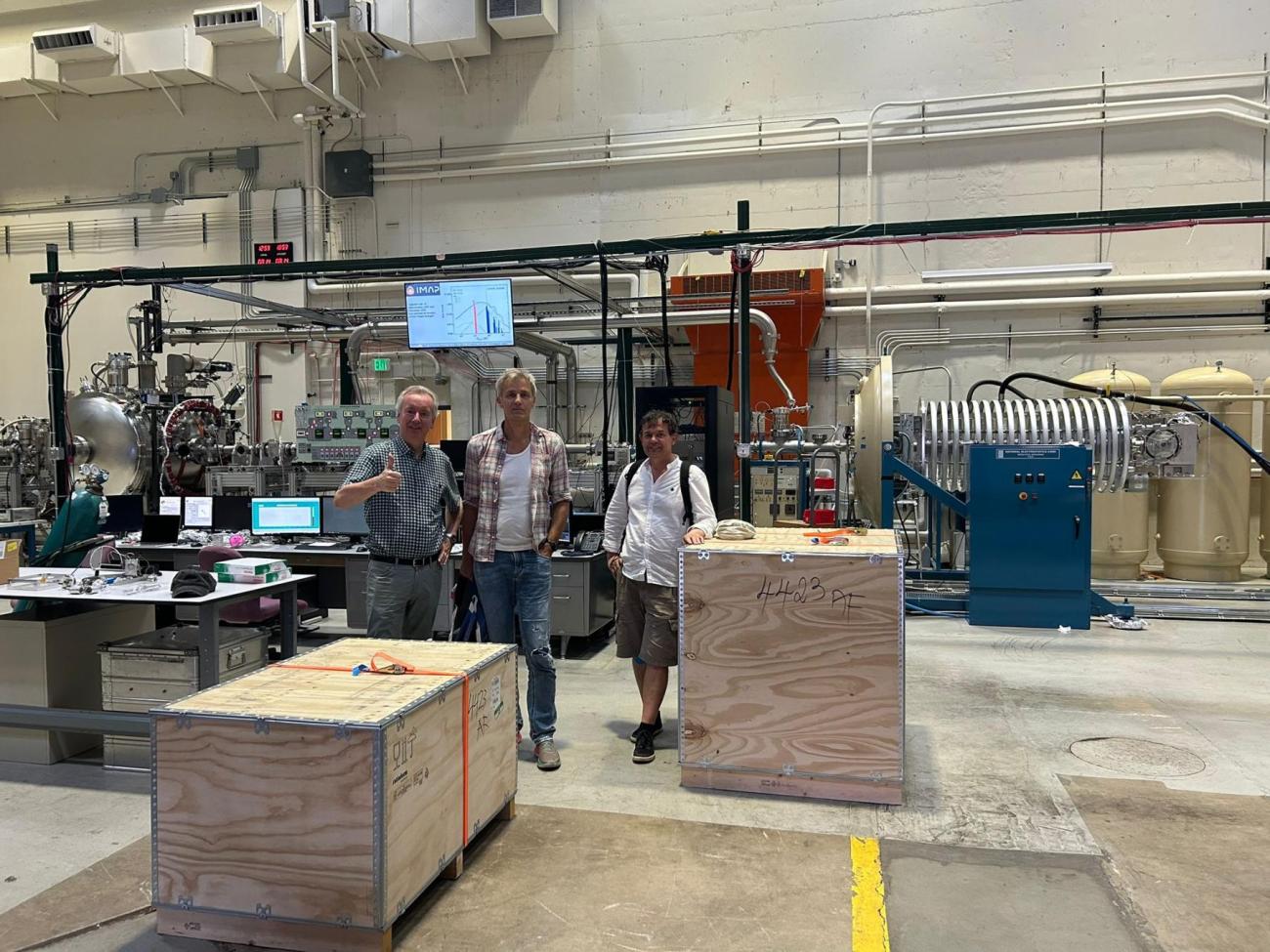
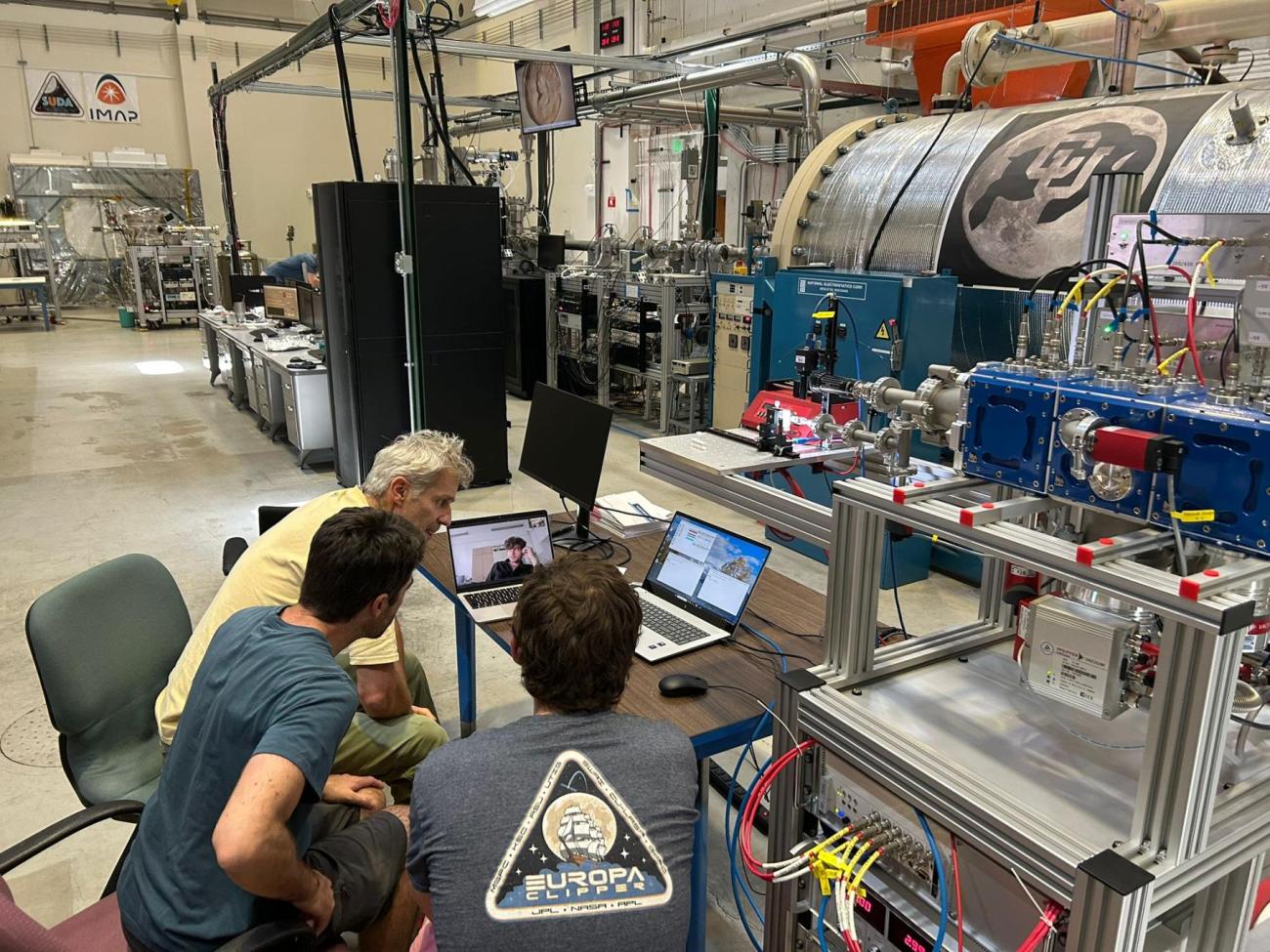
The SELINA instrument was developed by the Department of Space Chemistry and Technology at the J. Heyrovský Institute of Physical Chemistry in cooperation with Leipzig University in Germany. In August, the team of Bernd Abel, Anatolii Spesyvyi, Ján Žabka, and Aleš Charvát delivered the instrument to the laboratories of the University of Colorado Boulder. On site, they assembled the device, put it into operation, and trained their American colleagues.
“The SELINA instrument is small in size but much more powerful than any of its competitors worldwide – it will be a breakthrough in the exploration of icy worlds in our solar system,” says Ján Žabka from the Heyrovský Institute of Physical Chemistry in Prague.
Cosmic collisions in the laboratory
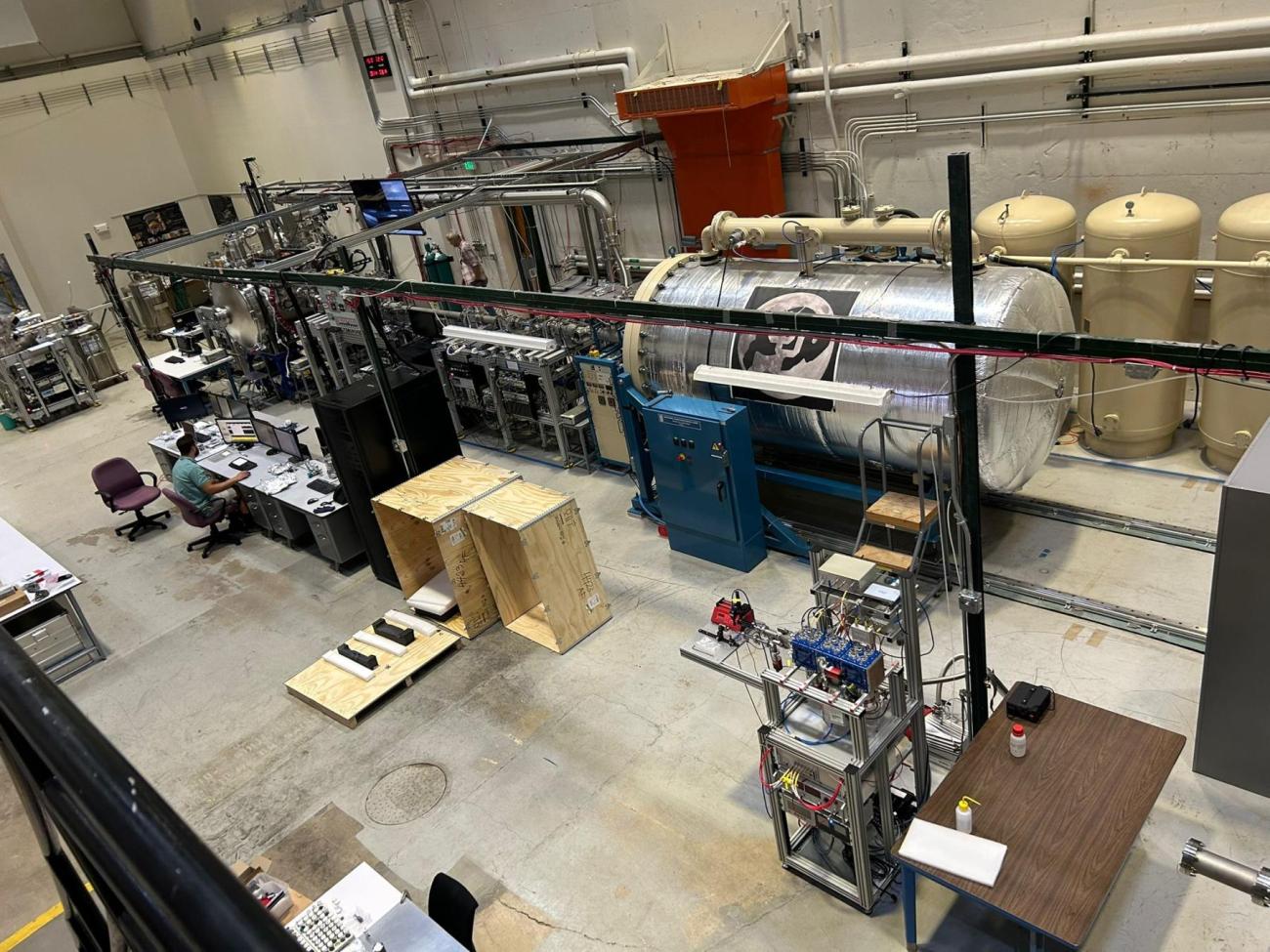
SELINA is a compact dust accelerator that enables scientists to recreate, under laboratory conditions, the impacts of ice grains ejected from the surfaces of the moons Enceladus or Europa – places considered promising candidates in the search for life in the solar system. By generating microscopic particles at extreme velocities and directing them at detector surfaces, SELINA helps test how spacecraft such as Cassini or the planned Europa Clipper analyze the chemical composition of ice grains in space. This allows scientists to better evaluate past data, prepare for future discoveries, and refine the search for biosignatures.
“SELINA is like a time machine for planetary science,” says Bernd Abel, head of the Department of Space Chemistry and Technology at the Heyrovský Institute of Physical Chemistry. “It allows us to replay in the laboratory the tiny cosmic collisions that spacecraft detect millions of kilometers away. This is how we connect what our instruments in space measure with the chemical reality on these fascinating ocean worlds.”
The SELINA instrument will in particular serve as a laboratory simulator of particle impacts for the SUDA mass analyzer, which is part of the Europa Clipper mission. This mission, launched in 2024, is aimed at exploring Europa, a moon of Jupiter. “This will allow us to create a comparative database of SUDA analyzer mass spectra,” adds Aleš Charvát from Leipzig University.
Simulating impacts that threaten space instruments
SELINA may also be used for laboratory simulation of micrometeoroid impacts on different surfaces, which may be important for protecting satellites. Micrometeoroids are dust particles and fragments traveling through space at speeds of tens of kilometers per second. Although smaller than a grain of sand, they carry enormous energy and can erode satellite surfaces, damage insulation layers, or shorten the lifespan of instruments. NASA is therefore actively searching for solutions to mitigate their effects. The SELINA instrument offers valuable support in this effort by enabling laboratory simulation of micrometeoroid impacts and testing the resilience of different materials.
A joint laboratory on the horizon
What began in Prague as a precision laboratory project is now part of humanity’s search for life beyond Earth. The goal is to strengthen international collaboration and increase the visibility of Czech research in the field of space chemistry and technology. Discussions are underway on establishing a joint international laboratory between Prague and Boulder, as well as on sending another instrument across the ocean – a variant of the high-resolution HANKA mass analyzer, developed at the Heyrovský Institute of Physical Chemistry. This device would complement SELINA’s research by providing detailed particle analysis and open new possibilities for NASA and other institutions in the study of extreme space conditions.
The project involves leading experts from DAL at the University of Colorado, including Mihály Horányi, a specialist in dust plasma who has participated in the Ulysses, Galileo, and Cassini missions; Sascha Kempf, who leads the development of the SUDA analyzer for the Europa Clipper mission; and Jordy Bouwman, who provides laboratory data for the Europa Clipper mission. The SELINA instrument will soon become part of NASA research projects and builds on more than a decade of collaboration between the Prague institute and the prestigious group in Boulder.
European project
The instrument was developed by the Department of Space Chemistry and Technology of the J. Heyrovský Institute of Physical Chemistry and funded by the European project ERA Chair of Space Chemistry and Technology at the J. Heyrovský Institute under the Horizon program, which underscores the European significance of Czech research in space chemistry.