


Science for practice: eco-friendly solar-powered floating water purifier seeks testing partners
Glass beads floating on the water surface could become a new ally in water purification. The scientific team led by Lenka Belháčová from the J. Heyrovský Institute of Physical Chemistry of the Czech Academy of Sciences has developed a technology called SolarDecont, which uses the principle of photocatalysis and combines sustainability, recycling, and solar energy into a simple solution for cleaner water. The team is now looking for partners to help test the technology in real-world conditions.
The potential of photocatalysis for water purification has been studied for over 40 years, yet transitioning from laboratory research to industrial-scale applications remains a major scientific and technological challenge. “Our goal was to find a way to use natural sunlight to clean water in a cost-effective, environmentally friendly, and long-term sustainable manner,” says Lenka Belháčová.
Purifying water directly from the surface
SolarDecont technology works on the principle of photocatalysis—a process in which light activates a special semiconductor material (titanium dioxide) that breaks down organic pollutants through physical and chemical reactions into harmless products like carbon dioxide and water.
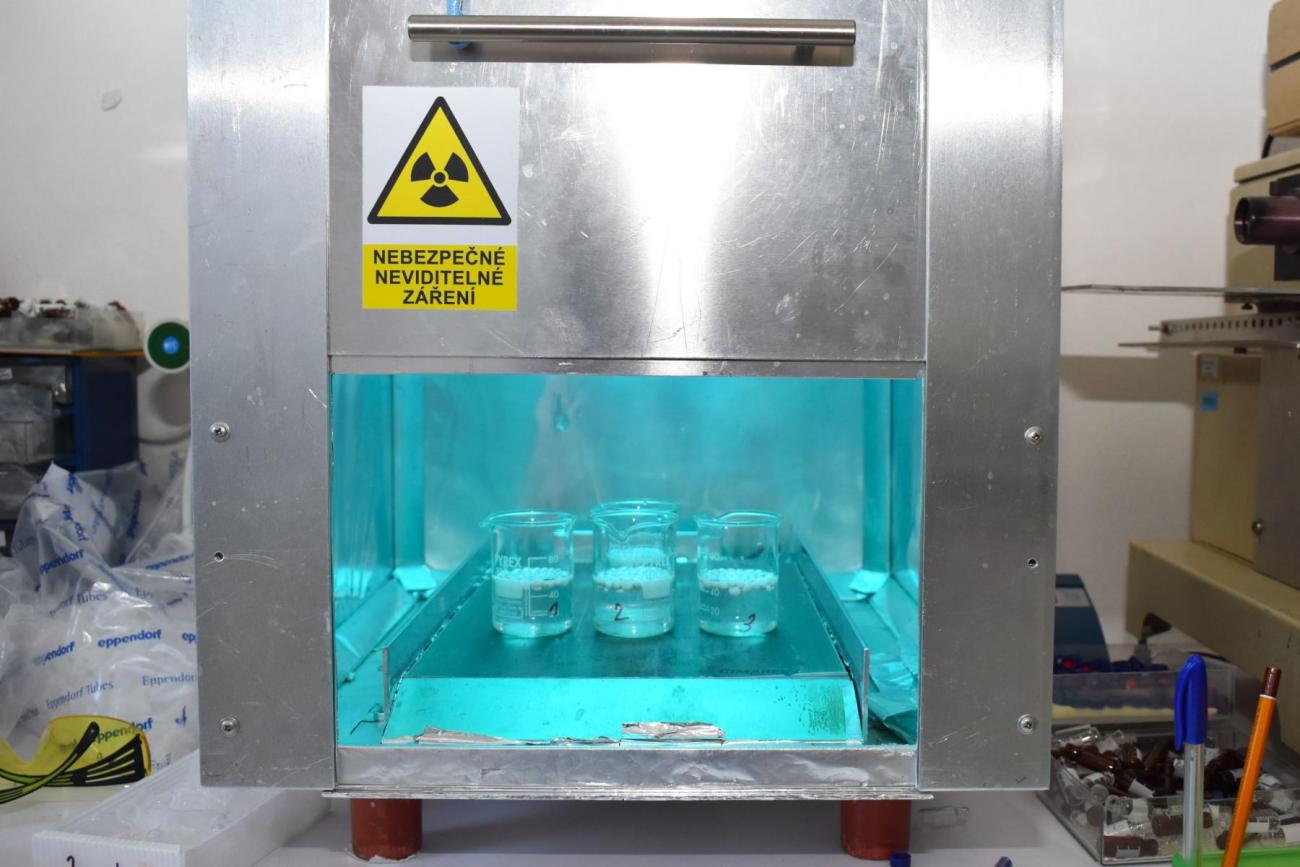
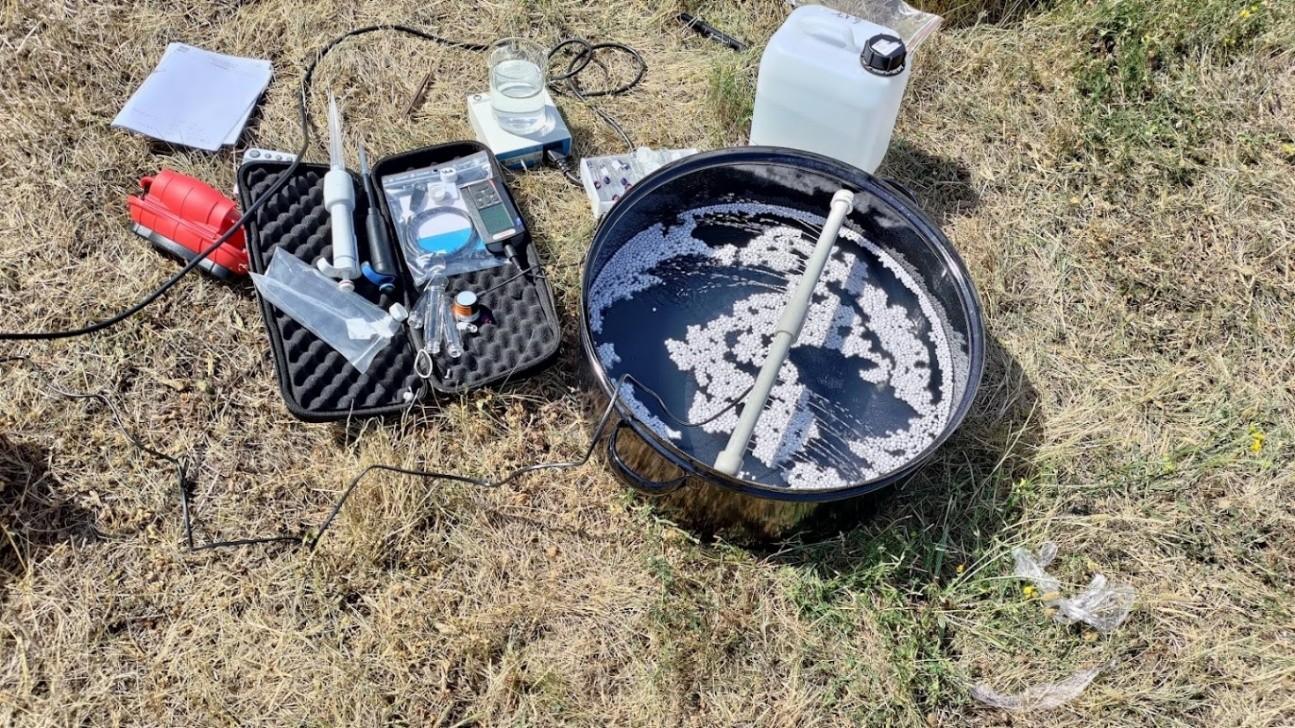
What makes SolarDecont innovative is that the photocatalyst is coated on tiny beads made from recycled foamed glass. Thanks to this design, the composite floats on the water's surface, where it can fully utilize sunlight or artificial light to activate the photocatalytic reaction. The beads are lightweight, durable, non-toxic, and easy to handle—simply sprinkle them onto the water surface. No complicated installation is needed, and when sunlight is used, the system requires no additional energy.
“We’re proud to have developed something that connects science, ecology, and the circular economy. It works, it uses waste material, and it’s environmentally friendly,” adds Lenka Belháčová.
Laboratory-proven efficiency
Under lab conditions, SolarDecont successfully removed a wide range of pollutants, including pesticides, antibiotics, organic solvents, and endocrine-disrupting compounds. During pilot tests with small volumes of water, the composite proved effective even using only natural sunlight. The results were published in the Journal of Water Process Engineering, and a follow-up study with expanded data is currently in preparation.
Collaboration and international impact
The prototype was developed in collaboration with the Institute of Inorganic Chemistry of the CAS and Czech company SChem, a.s., within the framework of a project funded by the Czech Technology Agency (Delta 2 Programme). Scientists from Hanoi University in Vietnam also participated in the research—Vietnam being a country still grappling with the environmental consequences of chemical warfare.
The team is now actively looking for partners to help test the technology under real operational conditions. The goal is to verify the long-term stability and performance of the composite material and confirm its potential for real-world water management applications.
“The technology is ready for practical use. We’d love to collaborate with companies or institutions working in the field of water treatment and bring our research into pilot deployment,” concludes Lenka Belháčová.